When Florida homeowners think of environmental hazards, hurricane winds, mold, and humidity usually top the list. Radon is often dismissed as a problem exclusive to northern states with deep basements. However, state building data and environmental health studies reveal a different reality: elevated indoor radon levels affect homes across Southeast Florida, even those built on concrete slab foundations.
Because radon is an odorless, colorless, radioactive gas formed by the natural decay of uranium in soil and rock, testing is the only way to detect its presence. Understanding how radon enters slab-on-grade structures and taking proactive diagnostic steps ensures your home remains a safe environment.
The Misconception About Florida Soil and Slab Foundations
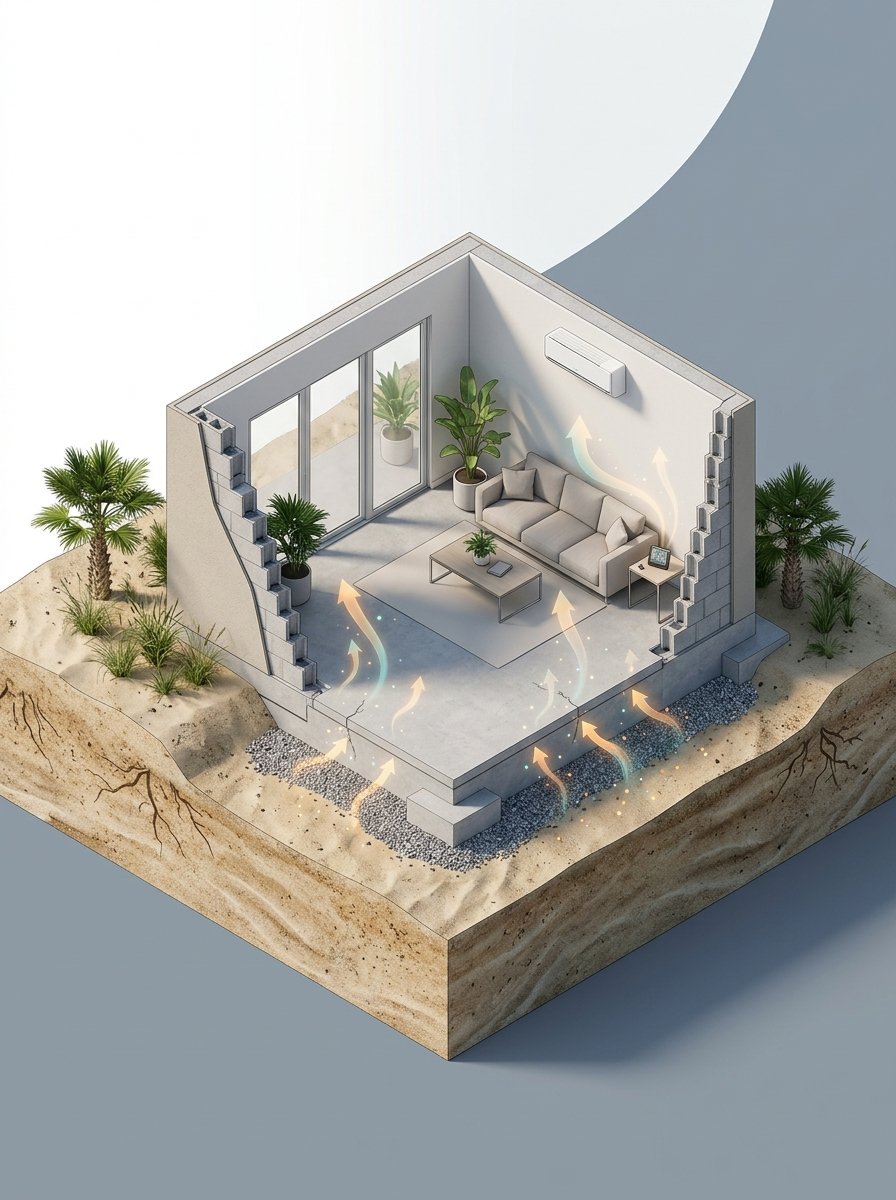
A common myth among homebuyers in Palm Beach, Martin, and St. Lucie counties is that the lack of basements eliminates radon risk. In reality, slab-on-grade foundations are directly vulnerable to soil gas intrusion.
According to the Florida Department of Health Radon Program, radon moves freely through permeable soil, sand, and phosphate-rich rock deposits common to Florida geography. As pressure differences naturally occur between the interior of a home and the soil beneath the slab, radon is drawn upward into the living space.
Key entry pathways in Florida homes include:
Unsealed cracks in concrete slab foundations
Construction joints and expansion gaps
Plumbing and utility penetrations beneath baths, showers, and sinks
Porous concrete block (CBS) wall cores
Why Indoor Air Quality Matters in Air-Conditioned Homes
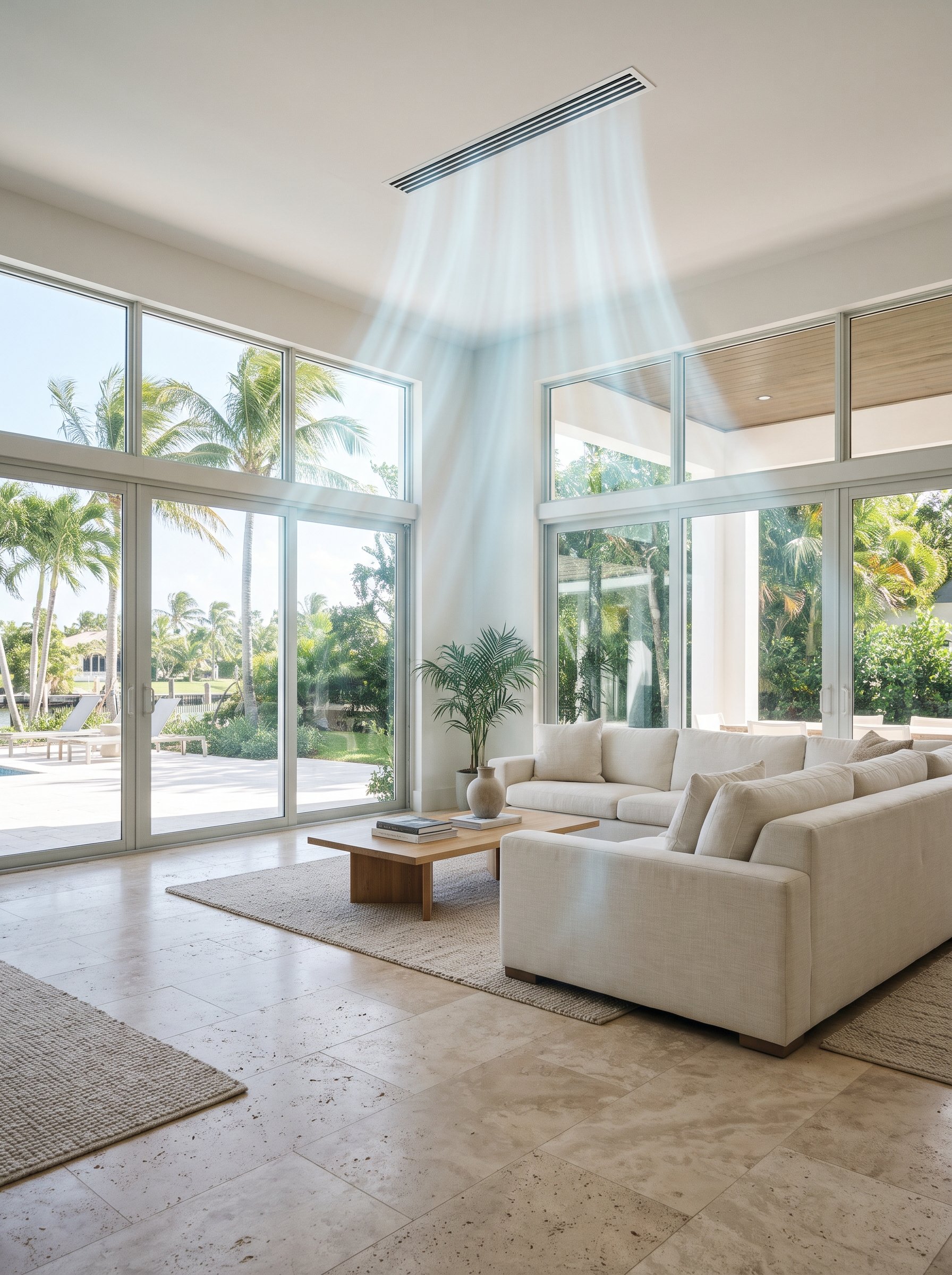
South Florida’s climate requires air conditioning systems to run nearly year-round. While keeping homes cool and humidity under control, tightly sealed building envelopes with continuous HVAC operation can trap airborne contaminants indoors.
When elevated radon gas enters a closed indoor environment, decay products attach to dust particles and are inhaled into the lungs. The U.S. Environmental Protection Agency (EPA) identifies radon as the leading cause of lung cancer among non-smokers, responsible for over 21,000 deaths annually in the United States.
Integrating specialized radon testing with your regular property evaluation provides a clear picture of indoor air safety before closing on a transaction or embarking on home renovations.
How Professional Radon Testing Works
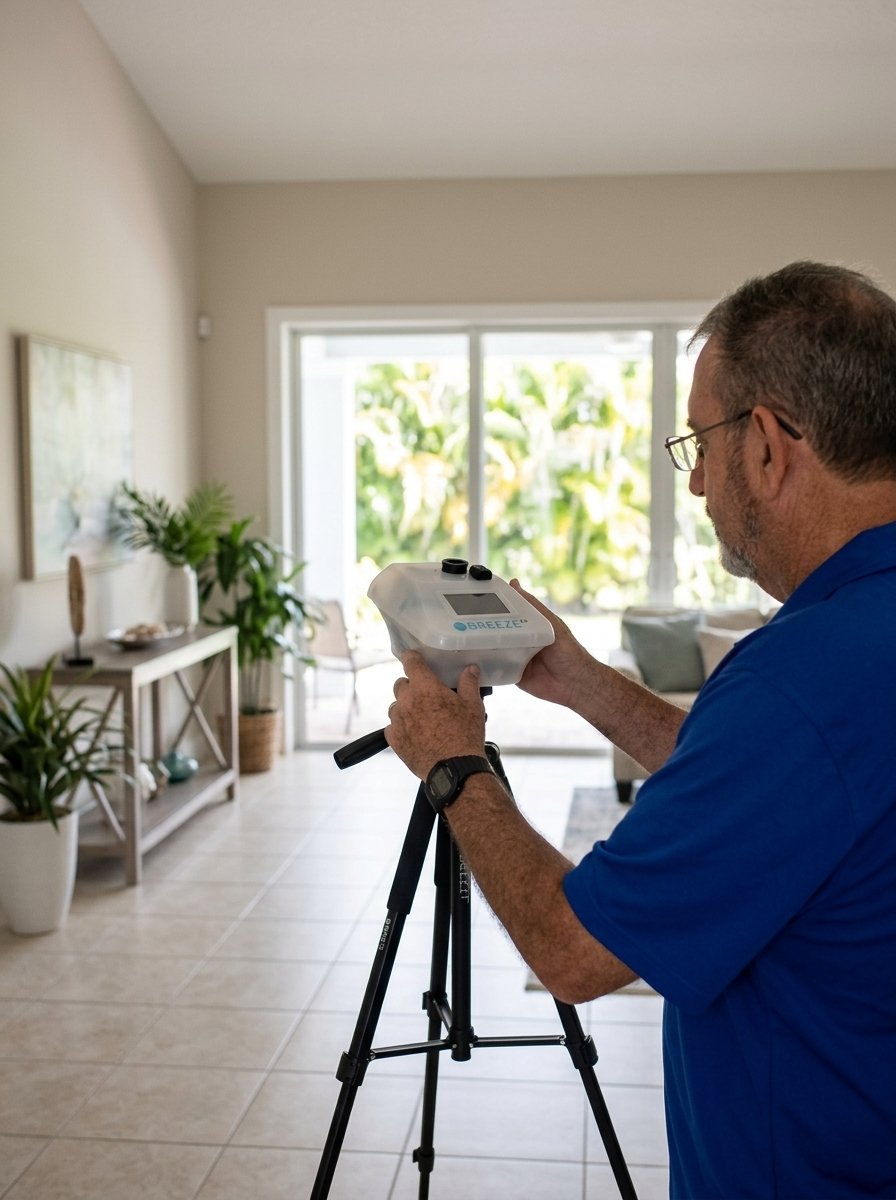
Testing for radon in Southeast Florida is simple, non-invasive, and delivers precise measurements measured in picocuries per liter (pCi/L). The EPA action level for radon mitigation is 4.0 pCi/L or higher.
At Kenco Home Inspections, continuous radon monitors (CRMs) or calibrated passive sampling devices are placed in the lowest livable area of the home for a minimum of 48 hours under closed-building conditions. This diagnostic process measures real-time fluctuations to ensure an accurate average reading.
Combining Environmental Diagnostics for Maximum Protection
Homeowners and buyers frequently combine radon assessments with other essential environmental services, such as:
Comprehensive mold inspection & testing to evaluate indoor spore counts and hidden moisture.
Underground sewer scope inspections to verify main drain line integrity beneath the concrete slab.
Standard pre-purchase home inspections to evaluate structural and mechanical systems.
Frequently Asked Questions
Can new construction homes in Florida have radon issues?
Yes. New construction homes built with modern energy-efficient sealing can trap radon gas inside just as easily as older structures. Performing an inspection during your 11-month warranty inspection window is an ideal time to evaluate indoor air quality while builder warranties remain active.
What should I do if my home tests above 4.0 pCi/L?
If testing indicates radon levels at or above 4.0 pCi/L, a certified radon mitigation specialist can install an active soil depressurization system. These systems vent sub-slab soil gases safely above the roofline, reducing indoor radon levels by up to 99%.
Is radon testing required during a Florida real estate transaction?
While not mandatory by state law, radon testing is strongly recommended by public health authorities during real estate transactions so buyers can negotiate mitigation solutions before closing.
Protect Your Family's Health with Certified Diagnostics
Don't leave indoor air quality to chance. Whether you are purchasing a new home in Palm Beach County, upgrading a property in Martin County, or maintaining your family residence in St. Lucie County, Kenco Home Inspections delivers thorough, reliable radon testing tailored to Florida homes.
Review our complete range of diagnostic capabilities on our services overview page, learn more about our Kenco benefits, or check our inspection preparation guide to schedule your assessment today.